3D World - The Magazine For 3D Artists

Search

Categories

Home Mental Roy About 3D World See example PDF Latest issue Stop Press Tutorials Animations Competitions Subscriptions Back issues Contact us Features _ Newsfeed Projects From the team

Dell Studio

Dell Studio

Latest Issue

The Magazine See example PDF

Training

find the right training course for you

Competition

Escape Studios Competition

News Feeds

All What is RSS?

Links

20100115 Friday January 15, 2010

How to choose rendering software: Part 2

Need help choosing a render engine? Part two of our guide to the subject explores some newer or less well-known options


In issue 126 of 3D World, we look at the range of rendering software currently on the market.

In the magazine itself, you can find a guide to ten key renderers: Brazil r/s, finalRender, FPrime, HyperShot, mental ray, MachStudioPro, Maxwell Render, RenderMan, Turtle and V-Ray.

But those are only a fraction of the rendering solutions currently available. Below, we look at five alternatives in more detail: the RenderMan-compliant renderers AIR and 3Delight, and the newer unbiased renderers fryrender, Indigo Renderer and Kerkythea.

At the end of the post, you can find links to yet more rendering systems, including open-source alternatives to those listed above. This list was accurate as of December 2009, but check developers‘ websites for changes.


X-Men Origins: Wolverine image courtesy of Rising Sun Pictures

RENDERER: 3Delight


TYPE Biased, RenderMan-compliant

PRIMARY USES VFX

HOST APPLICATIONS
Native support for: Maya, Softimage
Third-party support for: 3ds Max, Blender, Cinema 4D, Rhino, Houdini
Supports other applications via RIB format

PRICE $900 (two-thread standalone licence)

DEVELOPER DnA Research


First developed in 1999 and initially given away for free to build up the user base – a legacy which remains in developer DnA Research’s policy of not charging for the first licence – the RenderMan-compliant renderer 3Delight has built up a reputation on demanding VFX jobs.

Most prominently used by Australia’s Rising Sun Pictures, and the sole renderer the studio used on Superman Returns, 3Delight benefits from native editions for Softimage as well as Maya and good integration with Massive.

Throw in customer support to die for, and you have a renderer that offers an attractive balance of speed, quality and programmability for VFX shops.


USER VERDICT Malcolm Humphreys, CG Supervisor, Rising Sun Pictures

STRENGTHS
Maya and Softimage editions included with renderer
Near-next-day builds via support contract
Exclusive output variables

WEAKNESSES
Always playing catch-up with RenderMan
Priced per thread, not per machine
Rapid development cycle can be disruptive


City of Ember image © Walden Media/Playtone

RENDERER: AIR


TYPE Biased, RenderMan-compliant

PRIMARY USES VFX

HOST APPLICATIONS
Native support for: Maya, Rhino
Third-party support for: Blender, Cinema 4D, Houdini, Massive
Supports other applications via RIB format

PRICE $450 (four-thread standalone licence)

DEVELOPER SiTex Graphics


Over the past decade, AIR has built up a strong following among studios looking for a lower-cost RenderMan-compliant solution capable of producing high-quality imagery.

California’s Luma Pictures, which uses AIR alongside mental ray, cites its robust support for particle data (particularly the option to substitute multiple types of primitives for the same particle at render time) and baking capabilities, using the latter to bake both 2D maps and point clouds.

The image above shows a still from the studio‘s work on City of Ember. AIR was used to render the foam on the water.

As with other such systems, the need to rely on third-party converters to export RIB files from a 3D package can be an issue: something that SiTex is now addressing.


USER VERDICT John Cassella, Lead FX artist, Luma Pictures

STRENGTHS
More affordable than other RIB renderers
Robust particle support for particles
Flexible baking capabilities

WEAKNESSES
Historical reliance on third-party RIB exporters
Needs a more robust interpolating motion blur algorithm


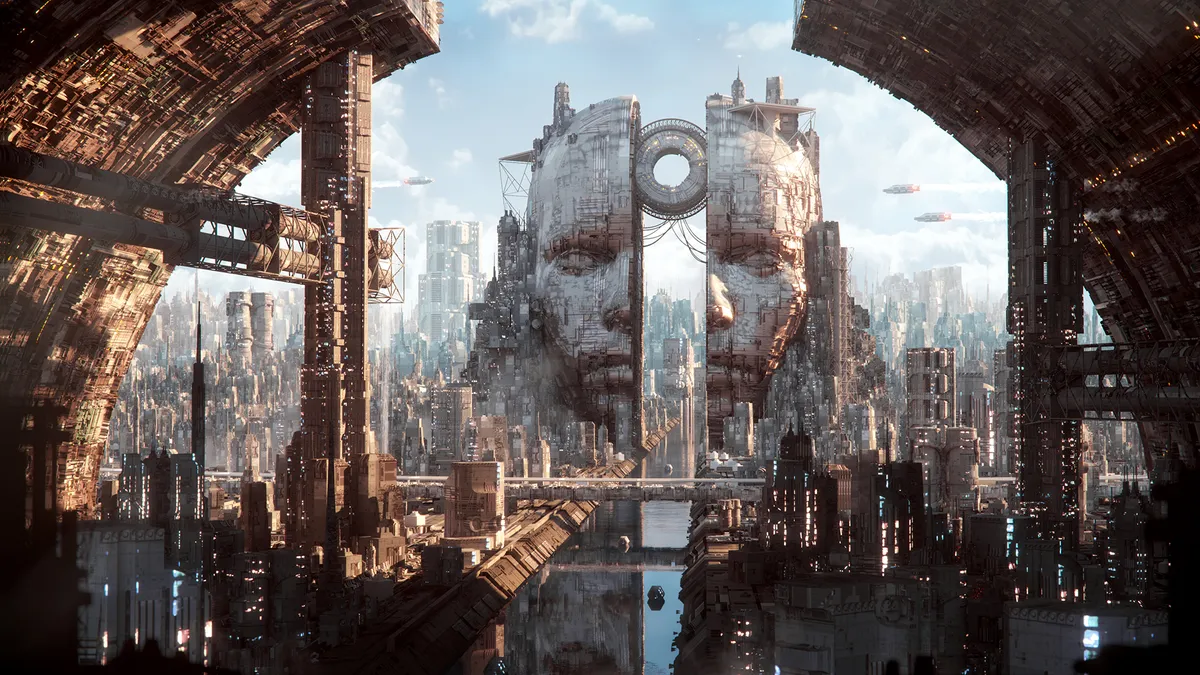
Image © Surreal Structures

RENDERER: fryrender


TYPE Unbiased, non-RenderMan-compliant

PRIMARY USES Visualisation

HOST APPLICATIONS 3ds Max, Cinema 4D, LightWave 3D, Maya, modo, Rhino, SketchUp, Softimage

PRICE €795 ($1,190: includes two render nodes)

DEVELOPER RandomControl


First seen in 2006, fryrender was one of the new wave of physically based renderers to follow in the wake of Next Limit’s Maxwell Render.

While the market was by then more attuned to the quirks of unbiased rendering, with many forum users demanding to see proof of render times before parting with their cash, there was no denying that fryrender delivered high-quality results.

Commercially released in 2008, it offers powerful physical lighting and interactive tonemapping tools – although, as with all such packages, image quality is a trade-off against render speed. RandomControl is still working on a VR system that will make scenes navigable in real time.


USER VERDICT Frances Gainer Davey, Founder, Surreal Structures

STRENGTHS
Automatic, physically accurate global illumination
Comprehensive material features, including translucency, MPD and opacity mapping
Full-featured console app: interactive lighting tweaks and tonemapping control

WEAKNESSES
Slower than engines that use interpolation for GI, particularly with caustics


Image © David Gudelius

RENDERER: Indigo Renderer


TYPE Unbiased, non-RenderMan-compliant

PRIMARY USES Visualisation

HOST APPLICATIONS 3ds Max, Blender, Cinema 4D, Maya, SketchUp, Softimage

PRICE €295 ($440: includes two render nodes)

DEVELOPERGlare Technologies


It’s a shock when a free product goes commercial, so while Glare Technologies had always been open about its roadmap, the news that Indigo Renderer was do just that elicited some comment when the news broke earlier this year.

However, according to our interviewees, the developer retains its community values of frequent upgrades and fast, personal customer support; and while, as with any unbiased engine, render times are a consideration, these are offset by Indigo’s ease of use.

“I much prefer to set up a scene for two hours and render for ten hours overnight than have to set up for ten hours and render for two,” comments freelance visualisation artist Arthur Staschyk.


USER VERDICT David Gudelius, Art director, design & MEDIA

STRENGTHS
Shallow learning curve
Intuitive interactive tonemapping while rendering
Strong customer support

WEAKNESSES
Still relatively unproven on commercial jobs


Image © Kim Frederik Balleby

RENDERER: Kerkythea


TYPE Hybrid (biased/unbiased), non-RenderMan-compliant

PRIMARY USES Visualisation

HOST APPLICATIONS
Native support for: 3ds Max, Blender, SketchUp
Supports most DCC packages via 3DS, OBJ formats

PRICE Free

DEVELOPER Ioannis Pantazopoulos


Kerkythea boasts the unusual distinction of having spawned not one, but two, commercial spin-offs this year: photorealistic SketchUp renderer Twilight Render and standalone tool Thea Render, currently in open beta.

However, developer Ioannis Pantazopoulos confirmed to 3D World that their parent product will continued to be offered free, and updated independently.

Harnessing multiple render engines for a hybrid biased/unbiased approach, users claim Kerkythea offers a gentler introduction to advanced rendering techniques than similar products; and while it retains a few rough edges, offers a feature set that belies its freeware status.


USER VERDICT Kim Frederik Balleby, Consultant, Friis & Moltke

STRENGTHS
Choice of biased or unbiased rendering
Deep, intuitive, physically accurate material editor
Powerful, flexible instancing brush tool

WEAKNESSES
Limited documentation
Network renders and IES lighting can be hard to set up


OTHER ALTERNATIVES


Free and open-source renderers

Aqsis
Popular open-source Render-Man-compliant renderer. Regularly updated.

Pixie
Another open-source alternative to RenderMan.

POV-Ray
Long-established freeware raytracing renderer.

YafaRay
Yet another free, open-source raytracing engine: their term, not ours!

SunFlow
Promising open-source renderer. Not updated since 2007, sadly.

Gelato
Pioneering GPU-accelerated renderer. Now free, but no longer in development.


SketchUp renderers

IDX Renditioner
Photorealistic render engine, capable of large-format output.

LightUp
Promising newer rendering plug-in from UK developer Adam Billyard.

SU Podium
One of the original third-party render engines for SketchUp.

Twilight Render
Promising new render engine, derived from the free Kerkythea software.


Up and coming [As of December 2009]

FurryBall
New GPU-accelerated renderer for Maya, as used on the movie Goat Story.

Guerilla Render
New production renderer for Maya.

LuxRender
Promising-looking unbiased, physically based render system.

RenderSpud
Cross-platform GI renderer, being developed by programmer Mike Farnsworth.

Shaderlight
Interactive renderer for 3ds Max from former rendering hardware specialist ARTVPS.
Just released: look out for a review in the magazine soon


Advertisement
Comments:

Very nice list of rendering engine comparision.

Thanks.

Posted by Sim Pern Chong (127.0.0.1) on January 18, 2010 at 09:02 AM GMT
Website: http://www.studiorola.com #

fryrender rules

Posted by Nick Darlington (127.0.0.1) on January 30, 2010 at 12:33 AM GMT #

Comments are closed for this entry.

Calendar

« January 2010 »
SunMonTueWedThuFriSat
     
1
2
3
4
6
8
9
10
14
16
17
18
20
21
22
23
24
25
28
29
30
31
      
Today
Malaysia Ezine